
From different artists singing hit songs to many producers making amazing films, 1953 was proven as a good year for Hollywood. We have reviewed and highlighted the major events for the year 1953 in this article. Let’s check them out.
Film
Singin’ in the Rain
Today, we don’t see movies using the songs that have already been used in the previous movies. But the 1950s was a different era. In 1953, the famous film “Singin’ in the Rain” wasn’t the only film to feature its title song. It was also debuted in The Hollywood Revue (1929) and was featured in several other films.
The Crucible
The Crucible, a popular play by an American playwright Arthur Miller was premiered in 1953. The play was a dramatized and fictionalized (most of it) story of the Salem witch trials, which took place during 1692–93 in the Massachusetts Bay Colony.
Popular Movies of ’53
The popular movies of that era include the following:
- The Wild One
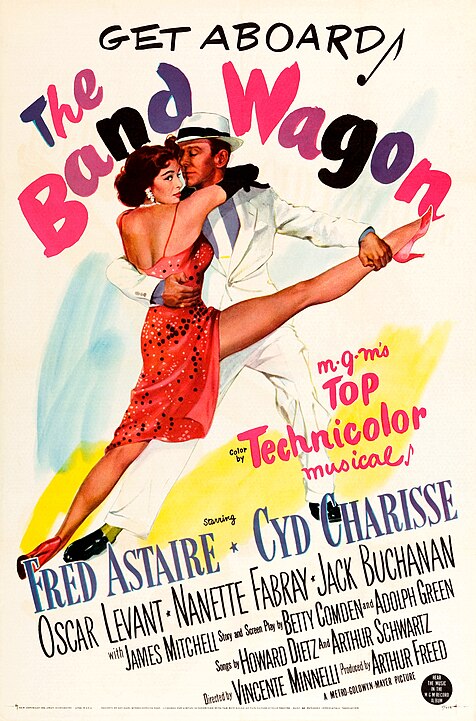
- The Band Wagon
- The War of the Worlds
- Shane, Stalag 17
- Beat the Devil
- Shane
- The Robe
- Roman Holiday
- The Bigamist
- Julius Caesar
- The Big Heat
- Gentlemen Prefer Blondes
- The Robe
- Niagara
- Peter Pan
- Pickup on South Street
- The Naked Spur
- House of Wax
Sports
Cincinnati Reds Changed Their Name
Cincinnati Reds changed their name to Cincinnati Redlegs from 1953 to 1958 because they were afraid that people don’t think of them as communists or don’t associate them with communism.
World Series Champions
New York Yankees defeated the Brooklyn Dodgers.
NBA Champions
Minneapolis Lakers defeated the New York Knickerbockers.
NFL Champions
Detroit Lions defeated the Cleveland Browns.
Fashion
The Sales of Black Leather Jackets Boosted
After the film “The Wild One” was released, the sales of black leather jackets and motorcycles reached new heights. This movie starred the famous Marlon Brando.
First Issue of Playboy Magazine
December of 1953 was the time when Playboy was first introduced to the public. However, it was undated. Want to know the reason why? Because Hugh Hefner wasn’t even sure if there ever will be a second issue. This magazine featured a centerfold nude photograph of Marilyn Monroe. 54,175 copies of Playboy magazine were sold at 0.50 USD each.
Miss America
Neva Jane Langley, born on January 23, 1933, was the 26th Miss America of the year 1953. Also, she became the first-ever Miss Georgia to win the crown.
Miss USA
The second edition of the Miss USA pageant was held on July 16, 1953, in Long Beach, California. The title was given to Myrna Hansen of Illinois by the first Miss USA, Jackie Loughery of New York.
Television
Most popular TV shows
The most popular TV shows in the year 1953 were:
- I Love Lucy (CBS)
- Dragnet (NBC)
- Arthur Godfrey’s Talent Scouts (CBS)
- You Bet Your Life (NBC)
- The Milton Berle Show (NBC)
- Arthur Godfrey and his Friends (CBS)
- Ford Theatre (NBC)
- The Jackie Gleason Show ((CBS)
- Fireside Theatre (NBC)
- The Colgate Comedy hour (NBC)
Lucy Give Birth
About 71.1% or all TV sets in the United States were tuned in to “I Love Lucy” to watch the ever-famous episode “Lucy Give Birth” on January 19, 1953.
Color Television
The Federal Communications Commission (FCC) of USA approved color televisions in 1953. And the first-ever color TV set went on sale for about $1,175.
Radio
News of Stalin’s Death
The (future) rock pioneer Johnny Cash was the first radio operator to announce the news of Stalin’s death. He was serving with the United States Air Force in Germany in 1953.
News
First Transgender American Woman
Today, people are accepting transgender and gays, and they also have rights in the USA. Back then, all this wasn’t as common as it is now. Christine Jorgensen, the first transgender American woman, traveled to Denmark to perform a sex-change operation. When she returned to New York in 1953, she became an instant celebrity.
Although many jokes on her were made, including “Christine went abroad, and came back a broad,” she never bothered and was happy with herself.
The Word “Frenemy”
The word “frenemy” was first used in a modern way in the 1953 article “Howz about calling the Russians our Frienemies?” It was written by a gossip columnist, Walter Winchel,for Nevada State Journal.
Hank Williams’ Death
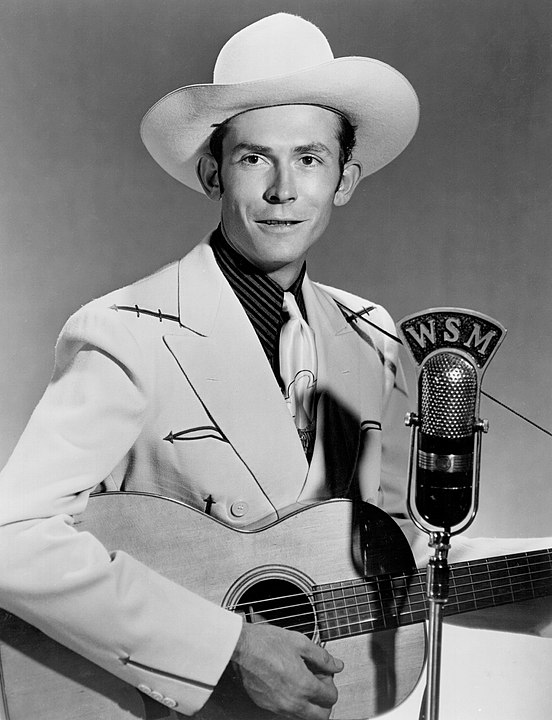
Hank Williams, known as the most significant music artist of all time, was died due to a heart attack on January 1, 1953. The result of the original autopsy indicated that Williams’ heart failure was caused by the combination of drugs, including morphine, alcohol, and chloral hydrate.
President of the United States
Dwight D. Eisenhower became the 34th President of the United States, by succeeding Harry S. Truman.
First Chevrolet Corvette
The first Chevrolet Corvette was also built in the year 1953 on June 30, at Flint, Michigan.
Jim Thorpe
A town in Pennsylvania named “Mauch Chunk” was somehow able to get the remains of an early 20th-century athlete, Jim Thorpe. They bought the rights to his name and renamed the town to his name as well. Now, it is something of a tourist attraction in Pennsylvania.
Innovation
Modern Speed Bump
The Nobel Prize-winning chancellor of Washington University, the Nobel Prize-winning chancellor of Washington University, was annoyed by how people drive fast through the campus. To fight this problem, he designed the modern speed bump. Thanks to this innovation, that stopped many young adults from showing off their fast cars at the campus.
Literature and Arts
First James Bond Novel
The first James Bond novel, Casino Royale, was published by Ian Fleming in 1953.
The First Draft of Fahrenheit 451
The first draft of Fahrenheit 451 was written by Ray Bradbury on a coin-operated typewriter in the basement of the UCLA library. He was charged 10¢ for 30 minutes, spending a total amount of $9.80 at the machine.
Popular and Notable Books
Following is the list of most popular books at that time:
- Battle Cry by Leon M. Uris
- Beyond This Place by A. J. Cronin
- Casino Royale by Ian Fleming
- The Chronicles of Narnia: The Silver Chair by C.S. Lewis
- The Crucible by Arthur Miller.
- Desirée by Annemarie Selinko
- Fahrenheit 451 by Ray Bradbury
- From Here to Eternity by James Jones
- Lord Vanity by Samuel Shellabarger
- The Robe by Lloyd C. Douglas
- The Silver Chalice by Thomas B. Costain
- Time and Time Again by James Hilton
- The Unconquered by Ben Ames Williams
Music
Popular Music Artists
Following is the list of some biggest pop music artists of 1953:
- Ames Brothers
- B. King
- The Clovers
- Dean Martin
- The Dominoes
- Eddie Fisher
- Frank Sinatra
- Joe Turner
- Joni James
- Kay Starr
- Les Baxter
- Les Paul & Mary Ford
- Nat ‘King’ Cole
- The Orioles
- Patti Page
- Percy Faith
- Perry Como
- Ruth Brown
- Stan Freberg
- Teresa Brewer
- Tony Bennett
Vaya con Dios
Vaya con Dios, translating to May God Be With You, is a pop song written by Larry Russel, Buddy Pepper, and Inez James. It was recorded in December 1952, but Les Paul and Mary Ford had a #1 recording of the song in the year 1953.
It was chosen as one of the Top 100 Western songs of all time by Members of the Western Writers of America. Also, this 1953 recording of the song Vaya con Dios was inducted in the Grammy Hall of Fame.
Related posts:
- Highlights of the Major Pop Culture Trends of the 1950s
- Pop Culture in Review for the Year 1950
- Pop Culture In Review for the Year 1951
- Pop Culture in Review for the Year 1952
- Pop Culture in Review for the Year 1954
- Pop Culture in Review for the Year 1955
- Pop Culture in Review for the Year 1956
- Pop Culture in Review for the Year 1957
- Pop Culture in Review for the Year 1958
- Pop Culture in Review for the Year 1959