
Famous events around the globe define a time period’s pop culture. This pop culture is an important factor on how people live their lives. It changes perspectives and the thinking process of people towards different aspects. Pop culture includes major events and happenings such as sports news, technological advancement, general news and politics, music, fashion, and the entire showbiz industry.
Therefore, pop cultures are very important. Find out more about pop culture in 1968.
Film
Some of the masterpiece films were released this year which influenced the entire cinematic experience for the viewers.
2001: A Space Odyssey
Considered to be one of the most aesthetically important films in the American history, 2001: A Space Odyssey was a film based on outer space. Screenplay was written by Kubrick and Arthur C. Clarke. The film was considered as a Masterpiece for the fact that it involved a new theme of films which was focused on human evolution, artificial intelligence, and a possibility of aliens.
The film was nominated for four Academy Awards of which Kubick won for his direction on the visual effects. Critics had very contradicting responses on the film as some considered it to be apocalyptic while others saw it as an optimistic film focusing on betterment of humans in the future.
Film Rating System Introduced
In 1968, Motion Picture Association introduced their own film rating system to be used in the United States and nearby territories. The purpose was to balance out the content according to the type of audience that was seeing the films. The MPAA film rating system was a voluntary scheme announced to segregate films to be viewed with family and films that include relatively adult content. Many theatres made it essential for films to have certain ratings if they needed their film to be played in that theatre.
Romeo and Juliet
Based on the novel of the same name by William Shakespeare, the tragedy film of Romeo and Juliet was released in 1968. It was directed and written by Franco Zeffirelli while the stars of the film include Leonard Whiting and Olivia Hussey. The film has also received awards for the Best Cinematography and Best Costume Design while nominations also included Best Director and Best Picture. With a budget of less than $1 million, the film was able to make $39 million as the income. The film was appreciated by critics as well.
Will Smith was Born
On 25th September 1968, one of the famous and popular actors of today’s times, Will Smith, was born. In April 2007, he was considered as the most powerful actor in Hollywood. Will Smith has had an exceptional career where he has won over four Grammy Awards and has been nominated for 7 others. Will Smith is considered as one of the richest stars of Hollywood with a net worth of more than $8 billion. Some of the top films of Will Smith include Men in Black, I-Robot, Aladdin, The Pursuit of Happiness, Bad Boys, and Suicide Squad. For quite a long time, Will has had a career as a successful singer with four major albums released to date.
Music
Biggest Hit Singles
From the different types of chart positions of the year 1968, five songs made it as the biggest hit singles for the year. These include Hey Jude by The Beatles on number one, What Wonderful World by Louis Armstrong on number two, The Dock of the Bay by Otis Redding on number three, Jumping Jack Fish by The Rolling Stones at number four, and Lady Madonna by The Beatles at number five. These are the songs that received the most ratings in the year 1968 and were featured in different top charts.
Elvis Gold Records – Volume 4
Elvis Presley recorded his album Elvis Gold Records in the year 1968 which was one of the greatest hit’s albums by the singer. The album was so good that it was certified to be of Gold status by the Recording Association of America. It was a compilation of the best performing songs of the singer sung between 1961 and 1967. Billboard 200 ranked it at the 33rd position.
Singer Celine Dion was Born
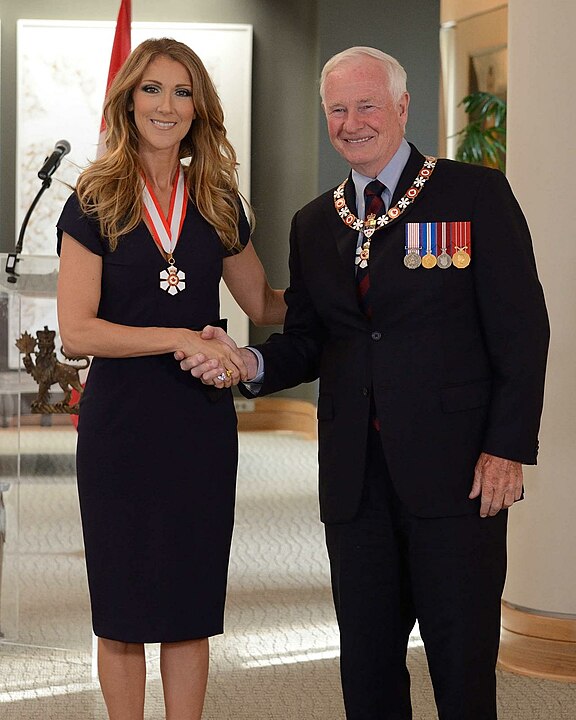
The famous singer Celine Dion was born on 30th March 1968. She has stayed in the music industry for long due to her exceptional vocals and having bestselling albums with over 200 million copies sold worldwide. She started off her career by winning the Yamaha World Song Festival of 1982 and Eurovision Song Contest of 1988. Billboard has named her as “Queen of Adult Contemporary” for having most songs on the number one rank. Popular songs of the singer include “The Power of Love”, “Think Twice”, “Because You Loved Me”, “It’s All Coming Back to Me Now”, “My Heart Will Go On”, and “I’m Your Angel”.
Technology
World’s First Supersonic Aircraft
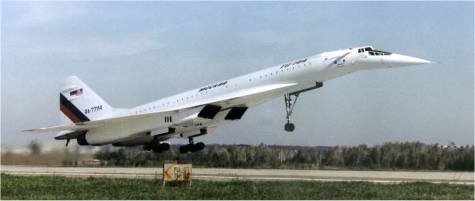
It was a year of development for the aviation industry because the Soviet Union had its first supersonic aircraft up in the air. This aircraft had the capability of breaking the sound barrier and reaching over Mach-1 speed limit. The Tupolev Tu-144 made its first flight on 31st December 1968. Although fighter planes had already achieved supersonic speed, this was the first passenger aircraft to reach such a high speed.
Heart Transplants becoming successful
On January 2, the second successful heart transplant surgery was performed by an American well qualified doctor, Christiaan Barnard. The heart transplant was done on a 59-year-old patient named Philip Blaiberg. The operation was a success and Blaiberg stayed alive for another year and a half after which he died due to heart problems. Living for such a long-time span made it clear that heart transplants were technically very easy to achieve and had a major possibility of being done in a flawless manner in the near future as well.
Intel’s Arrival
1968 marks the year when Intel Corporation came into existence by Robert Noyce and Gordon Moore. The company was founded on 18th July 1968. The tech firm was based on developing different types of memory chips and microprocessor chips. These became the reason for success for the company when the concept of having a personal computer increased.
Today, Intel develops microprocessors for different computers as well as smartphone chipsets along with other advanced hardware. It also sells graphics cards and embedded processors to the companies. Fortune 500 has ranked it at 46th in terms of largest United States corporations in terms of total revenue.
Sports
Baseball Scorers reach Hall of Fame
Different players were added into the Hall of Fame in the year 1968. The first player was Joe Medwick who was voted to be a part of the Hall of Fame on January 23. The former player had won the Triple Crown in 1937 and batted .300 in 14 out of 17 sessions.
On January 28th, Goose Goslin and Kiki Cuyler were admitted to the Hall of Fame by the Special Veterans Committee. Both were exceptional players. Goslin had a career with .316 hitter and played in four World Series Championships while Cuyler was a .321 career hitter with four base crowns.
Super Bowl 1968
The Super Bowl for Football was played in the year 1968 on 14th January. More than 75,000 people attended the Super Bowl. It was the second AFL-NFL World Championship game between American Football League and the National Football League. NFL’s team Green Bay Packers won against AFL’s team Oakland Raiders with a score of 33 to 14. This game created an impression regarding the NFL that it has one of the strongest teams with it because this was the second time in two years that an NFL’s team won back to back in the same stadium. The event was on such a large scale that the cost of a 30-second commercial between the breaks went up to as high as $54,000.
Interesting events of Golf
In Men’s Professional Golf, Bob Goalby was the one who was losing but won due to an error made by Robert DiVincenzo made an error on the scorecard and wrote 4 instead of 3 on the 17th hole. Such a major error occurred in the Masters Tournament of Golf. The British Open was won by Gary Player while Lee Trevino won the US Open. Money Leader for PGA tour was Billy Casper earning over $200,000 and breaking all previous records.
Women’s golf was also interesting where the Women’s Western Open was discontinued while the Titleholders Championship was not played due to technical difficulties. Moreover, Sandra Post who was a rookie player became the youngest golfer to win the LPGA Major Tournament by having LPGA Championship.
Television
60 Minutes
The famous American television news magazine broadcast, 60 minutes, was launched on the CBS television network in the year 1968. Starting from 1968, it is now considered as the longest running time news magazine. The show was created by Don Hewitt. This program was different from other news programs because it was more focused on having a reporter style investigation. Of the 50 greatest shows of all time, TV’s Guide ranked 60 minutes on number 6. According to The New York Times, it was one of the most esteemed news magazines on the American television.
News
Assassination of Martin Luther King
The most disturbing news of the year was the assassination of Dr. Martin Luther King on April 4th, 1968. Although he was immediately rushed to the St. Joseph’s Hospital in Memphis, Tennessee, he could not survive. The leader of different types of civil right movements was killed by James Earl Ray, a fugitive who pleaded guilty. However, many believe that the assassination was just a conspiracy against Martin Luther King for his voice against the unfair norms and violation of civil rights. Following his death, the King Assassination riots started in all major cities of the United States which stayed up for one week.
Civil Rights Act of 1968
Following the death of Martin Luther King, the Civil Rights Act of 1968 was announced and signed by President Lyndon B. Johnson. The act safeguarded the interests and rights of all individuals and clarified that discrimination of any kinds would now be punishable by law. it also protected pregnant women from attending their jobs. Racial and religious discrimination principles were now strictly enforced. The act also said that any person who forces the other person for any kinds of work would also be punishable by law as forcing or threatening became illegal. This was one of the major developments that took place in the year 1968.
Presidential Election 1968
The 1968 Presidential Election of the United States was the 46th election held on Tuesday November 5th, 1968. The competition was between Former Vice President Richard Nixon from the Republican party and Incumbent Vice President Hubert Humphrey who was a Democratic nominee. Former president Lyndon B. Johnson had already stated that he will not be participating in the elections of this time. Richard Nixon was announced as the 37th President of the United States of America.
Conclusion
1968 was truly a year with many ups and downs. Several important personalities were born such as Celine Dion and Will Smith. The sad turn of events was evident with the assassination of Dr. Martin Luther King. The Presidential Election also marked an important go ahead for the future of the United States of America. This was all about Pop Culture in 1968.
Related posts:
- Highlights of the Major Pop Culture Trends of the 1960s
- Pop Culture in Review for the Year 1960
- Pop Culture in Review for the Year 1961
- Pop Culture in Review for the Year 1962
- Pop Culture in Review for the Year 1963
- Pop Culture in Review for the Year 1964
- Pop Culture in Review for the Year 1965
- Pop Culture in Review for the Year 1966
- Pop Culture in Review for the Year 1967
- Pop Culture in Review for the Year 1969
- Interesting Trivia About 1960s Pop Culture