

Entertainment and media have been part of the different types of pop cultures since the ancient times. Moving towards a much more modern approach, other social events such as sports, technological impacts, new kinds of books and television shows are also considered as a part of pop culture. The following article will provide highlights of pop culture in 1967.
Film
Many popular films were released in the year 1967 and is considered as a year of breaking records in the film industry with various revolutionary films.
The Graduate
The most grossing film of the year in the American region was The Graduate which was directed by Mike Nichols. The story is based on the life of a graduate who is seduced by an older woman but falls in love with her daughter. The story has suspense along with romantic comedy and drama as well.
The film was released at the end of the year but gained commercial success instantly and has earned over $104 million which made it the most grossing film of the year. The film was nominated for many Academy Awards of which it received the award for Best Director. American Film Institute has considered it as the 17th greatest film of all time.
Birth of Actor – Vin Diesel
Year 1967 marks the birth of the famous actor Mark Sinclair, who is professionally referred to as Vin Diesel. He was born on 18th July. He has become a popular celebrity over the past many years due to his lead role in the Fast and Furious movies franchise where he has played the role of Dominic Toretto.
The star has been in many other famous films as well which includes Guardians of the Galaxy Series, Ralph Breaks the Internet, and Find me Guilty. Vin Diesel has his own production company by the name of One Race Films. Vin Diesel currently has over $200 million in his net worth.
The Jungle Book
Before Walt Disney died in the year 1966, he was in the final stages of producing the film, The Jungle Book. The film was released in 1967 and was the 19th Disney Feature Film. The story revolved around Mowgli, a child that was raised in the Indian jungle by animals surrounding him. The film was directed by Wolfgang Reitherman. Film cast included Phil Harris, Sebastian Cabot, and Louis Prima.
The film was successful throughout the United States as well as the other countries such as Germany. Remakes of the film and further parts were made in the coming years.
Bonnie and Clyde
One of the best films of 1967 which also ranked at number three on box office was Bonnie and Clyde. It was a film that was considered as revolutionary and a “bringer-for-change”. This is because it broke many cinematic taboos and discussed sensitive subjects such as sex and violence. It presented some of the bloodiest death scenes in cinematic history.
The film stars included Warren Beatty and Faye Dunaway while the direction was done by Arthur Penn. The film has received 5 Academy Awards and earned over $70 million with just a budget of $2.5 million.
Music
Doctor Dolittle
One of the most famous musical comedy films of all time was released in 1967, Dr. Dolittle. The movie was adapted from a novel by Hugh Lofting and had a combination of three of his books on the character, Dr. Dolittle. Film Stars include Rex Harrison, Samantha Egger, Anthony Newley and Richard Attenborough. The film was directed by Richard Fleischer. The film received a mix of positive and negative reviews but has won multiple Academy Awards such as for Best Original Song and Best Visual Effects. On box office, the film earned $9 million on a high budget of $17 million.
Musical Theatres
Many different types of musical theatres started to promote musical dramas and stories. Thee became popular and ran for over several hundred performances. The musical show “Curley McDimple” was produced by Off-Broadway production and ran for over 900 successful performances. Another such musical show was “Fiddler on the Roof” was started on February 16th and ran for more than 2000 successful performances.
The company Broadway Productions also had multiple musical shows started which include “Hallelujah, Baby!”, “Henry, Sweet Henry” and “How Now, Dow Jones”. This highlighted the fact that music and musical plays were becoming more and more important at those times.
Top Hits for the Year
1968 was the year in which The Beatles released more than 10 songs much of which became popular very soon. The year was known for more rock and roll music as singers were more focused on that. Singles that hit the top positions in multiple charts include “A Whiter Shade of Pale” by ProcolHarum, “All You Need Is Love” by The Beatles, “Light My Fire” by The Doors and another very famous song “Strawberry Fields Forever” by The Beatles.
Technology
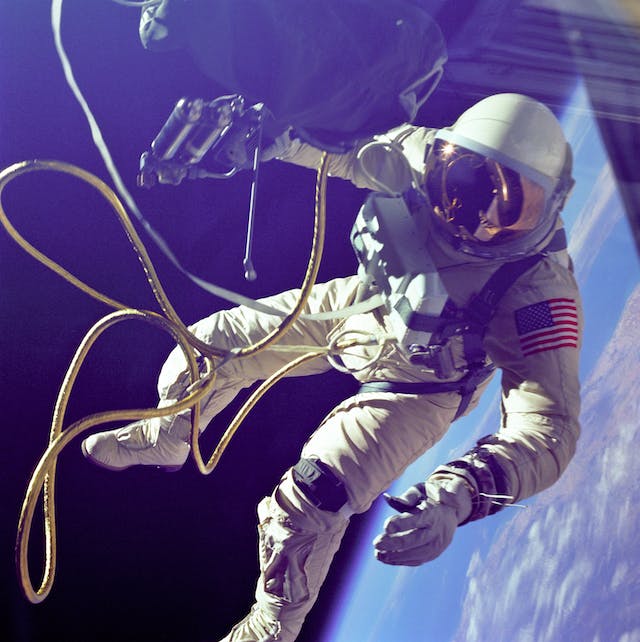
Space Exploration goes Wrong
Although, the year 1967 was the one where humans were very close to landing on the moon. Modern technology and better spacecraft were being made ready for humans to explore space. Amidst of this, an unfortunate incident happened when a plugs-out test for Apollo 1 was conducted. In a rehearsal that was being done, a fire broke out due to some electrical component’s issue.
However, the fire rapidly spread, and the rescue was also not possible because the plug door hatch could not be opened due to the extra internal pressure that was built up inside the cabin. Sadly, the three astronauts, Command Pilot Virgil I. “Gus” Grissom, Senior Pilot Ed White, and Pilot Roger B. Chaffee died in the accident.
Phaco emulsification Introduced
Modern technology was also proving to be quite helpful in the field of medicine. The process of Phacoemulsification was introduced in mid-1967 which was a method where the eye’s internal lens was emulsified with an ultrasonic handpiece so that it is aspirated from the eye. The Aspirated fluids were replaced with a balanced salt solution to keep the anterior chamber in its working position.
Charles Kelman was the scientist behind this idea who used ultrasonic vibrations after being inspired by his dentist’s ultrasonic probe.
Monkey learns American Sign Language
One of the most interesting scientific events of the year was when a chimpanzee was being taught the American Sign Language, a language used for people who are deaf and dumb. Surprisingly, the chimpanzee took it shorter than expected to learn the language. He grasped onto the different types of signs quickly and could explain his meaning properly. The chimpanzee, Washoe, learned more than 350 American Sign Language terminologies and taught it to her son Loulis.
Sports
Football Association Challenge Cup
The Football Association Challenge Cup was held in 1967. The event was held under The Football Association. The 86th Challenge Cup was held in England and the final match of the event was played in the Wembley Stadium. The teams that contested against each other were Tottenham Hotspur and Chelsea. Since both teams belonged to London, the final cup is also referred to as the “Cockney Cup Final”. Tottenham won the match against Chelsea with a score of 2 against 1.
FIBA World Basketball Championship
The FIBA World Championship of 1967 was the 5th session played among 12 nations which included Italy, Mexico, Yugoslavia, United States, Argentina, Japan, Peru, Soviet Union, Brazil, Paraguay, Poland, and Puerto Rico. Uruguay advanced out to the final rounds directly for being the host of the tournaments. The Championship was held in Uruguay between May 27 and June 11.
The Championship was won by Soviet Union while runners up was Yugoslavia. Third and fourth place were Brazil and the United States, respectively.
Books and Literature
Snow White Novel
The famous story of Snow White was initially published by the author Donald Barthelme in 1967 with the publication from Athenium Books. The book was later converted in the form of a film and multiple short stories as well. The story revolves around a young girl who is tortured by her wicked stepmother unless she meets a prince at the party. The purpose of this book, according to the author, was to create the image that there are different expectations of people and composing at many times is an essential requirement needed to survive in the world. The cover of the novel was created by Lawrence Ratzkin.
The Outsiders
One of the most interesting novels of its time, The Outsiders, was published in the year 1967 from the publication company, Viking Press. The author, S.E. Hinton, was only aged 16 at the time when she finished writing the novel. The book was published at the time when the author was aged 18. The book is famous for highlighting a unique topic of rivalry between two hands who are divided due to socio-economic status. The story is revolving around the young protagonist Ponyboy Curtis. The book was considered for a television series and a movie as well of which a small television story was made in the year 1990.
Television
First International Satellite Production
Our World was a show that was broadcasted on the television on 25th June 1967. The interesting aspect about it was that it was the first ever live, international, satellite television production which was seen in over 30 countries at a single time. The two-and-a-half-hour event was broadcasted live, and more than 700 million people watched the broadcast which was a record-making number of audiences at that time. Some of the creative artists performed in this event which includes The Beatles, Opera Singer Maria Callas, and Painter Pablo Picasso.
Producer 21 Street Birth
Michael Bendatti was born on 21st August 1967 in California who turned up to become a successful American Actor and Producer. The actor has worked in the different types of television series including the famous 21 Jump Street where he performed the role of Officer Anthony.
Other television shows where the TV star has performed include My Two Dads, Lady Monster, Baywatch, and Red Shoe Diaries.
News
Outer Space Treaty Signed
On the date when the three astronauts died in the accident of Apollo 1 plug fire, the Outer Space Treaty was also signed between the USA and USSR. This acted as a guidebook for states in exploration and use of outer space including the moon, other stars, celestial objects, and planets as well. This acted as the new International Space Law. The USA, UK, and USSR signed the treaty on 27 January 1967 and was applicable from 10th October 1967. Since then, many countries have become a part of this treaty to explore space in a peaceful and friendly manner with the collaboration of other countries as well.
On May 19, the treaty also added the clause for not using any kinds of nuclear weapons in outer space.
Detroit Riot 1967
Perhaps one of the worst events in the history of the United States and the worst riot of the times was the Detroit Riot of 1967. The riots were held between African Americans and the Police Department of Detroit. The riots started on 23rd July 1967 and extended to many days. The riots erupted due to the unlicensed police raid that was conducted after working hours at a bar known as a blind pig. The riots continued for five days and destroyed more property than last destroyed in 1943 race riots.
Situation was so out of control that the United States Army and Airforce was brought to action. The results were devastating as 43 were pronounced dead and over 1200 were injured. 7200 protestors were arrested, and 2000 buildings were destroyed.
New Supreme Court Chief Justice
In 1967, the new Supreme Court Justice was needed and for the first time in the American history, an African American was given the position of Associate Justice of the Supreme Court of the United States of America. He was Thurgood Marshall who was an American lawyer and civil rights activist as well.
He is known to be one of the best Associate Justice as he argued several big cases before the supreme court and with him coming into power, the consequences for racial profiling became even more strict and highly punishable.
Conclusion
1967 was one of the years where there were major ups and downs in the history of pop culture. Many new social events such as musical theatres and songs helped in reshaping the perspective towards modern arts. Revolutionary movies also promoted the concept. The space exploration programs were a bit upsetting due to the death of the astronauts but that was one of the main events that saved NASA and other companies from bigger consequences in the future. 1967’s pop culture is truly a unique one in its own manner.
Related posts:
- Highlights of the Major Pop Culture Trends of the 1960s
- Pop Culture in Review for the Year 1960
- Pop Culture in Review for the Year 1961
- Pop Culture in Review for the Year 1962
- Pop Culture in Review for the Year 1963
- Pop Culture in Review for the Year 1964
- Pop Culture in Review for the Year 1965
- Pop Culture in Review for the Year 1966
- Pop Culture in Review for the Year 1968
- Pop Culture in Review for the Year 1969
- Interesting Trivia About 1960s Pop Culture