
Pop Cultures are generally becoming more influential every day. Pop Cultures comprise different types of social events and aspects which may impact a specific country’s culture. The year 1965 is one of the most important ones when it comes to pop culture probably because it was a year of change. Different countries were at war including America. This year has a series of upsetting events with a few good ones as well.
Let us take a look at the important events of 1965.
Film
For the film industry, many previous records were broken this year which makes it one of the most interesting aspects of 1965.
The Sound of Music
The Sound of Music was an American musical film released in 1965 and was the most grossing film of the year. The film is based on a 1959 stage musical drama with the same name. Film stars include Julie Andrews and Christopher Plummer along with Richard Haydn and Eleanor Parker. The film has been directed by Robert Wise.
The film became an instant success and earned a total of more earnings compared to the 7 other films in the top ten list of box office. The film earned a gross rental of about $72,000,000 on a budget of $8.2 million in the year. Five major Academy Awards including Best Picture and Best Director were also awarded for this film. It also received two Golden Globe Awards.
It was a good year for the company 20th Century Fox as three of their films including this one made it to the top 10 list of box office.
Doctor Zhivago
Doctor Zhivago was a romantic drama film directed by David Lean and based on the novel of the same name by Boris Pasternak. Although the film was banned in Russia it became extremely popular in the west and became the second most grossing film of the year. Film star Omar Sharif played the role of Yuri Zhivago.
The movie had mixed feedback from the critics as many argued that it is too lengthy by being over 3 hours. However, with time, the film gained popularity and won five Oscar Awards later at the 38th Academy Awards. It earned about 9 times of its budget of $11 million.
Music
Good Year for The Beatles
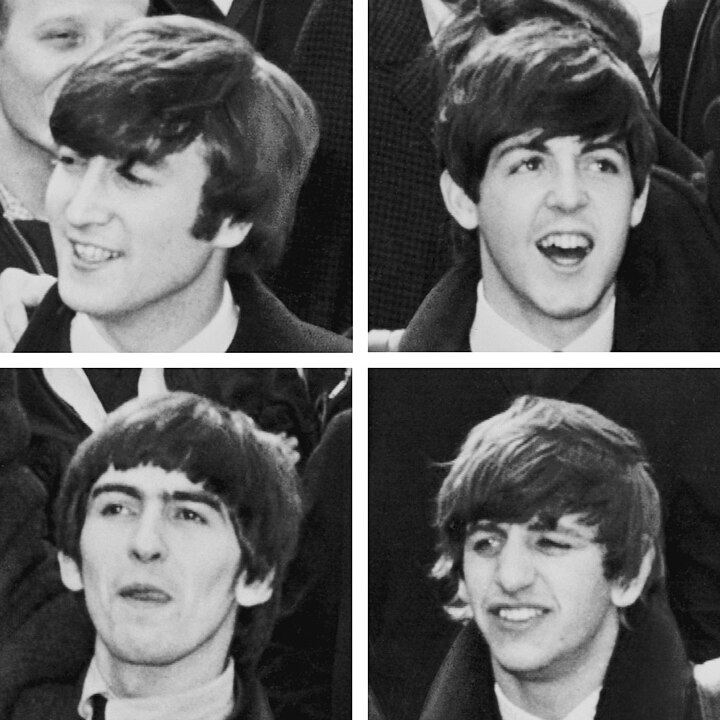
The year 1965 was one of the best ones for The Beatles because three of the songs sung by the band in the year got the position in the top 5 hit singles of the year. These songs include Help, Yesterday, and Ticket to Ride. The Beatles were also starting the shooting of their film “Help” this year. The year was also good for 1965 because the band won the Grammy Awards for the Best New Artist. Perhaps the most successful year for the band was 1965.
Eurovision Song Contest 1965
The Eurovision Song Contest 1965 was the tenth annual contest which took place in Italy. The contest was held on 20th March 1965 and was hosted by Renata Mauro. A total of 18 countries were a participant of this contest which set a new record for maximum number of participants. The contest winner was Luxembourg with the song “Poupée de cire, poupée de son” that was performed by France Gall, and written/composed by Serge Gainsbourg. Four countries, Belgium, Finland, Germany, and Spain got no points in the contest.
Death of famous Nat King Cole
A famous black American singer died this year whose name was Nat King Cole. The singer had recorded over 100 songs most of which became instant hits on the pop charts. He is also important for the American showbiz industry because he was the first African American to host a series on the television. A malignant tumor was found in his left lung in the end of 1964 following which he sought medical help but was told that he only had a few months to live. Cole died on the morning of 15th February 1965.
Technology
First Commercial Communications Satellite Launched
Intelsat I also known as the Early Bird was the first ever commercial communications satellite aircraft which was placed in orbit on April 6, 1965. It was built by Hughes Aircraft Company and activated it on June 28, 1965. It was the first commercial aircraft which had the first live TV coverage of a spacecraft splashdown. It was originally launched to work for 18 months only but remained in service for 4 years and 4 months after which it was deactivated in January 1969. The satellite still stays in the orbit.
Launch of PDP-8
The technology in 1965 was at its peak and was aggressively improving with time. The same happened when the minicomputer PDP-8 was invented. It was invented by Digital Equipment Corporation and was only a 12-bit minicomputer. It was so successful that there were over 50,000 units sold over the lifetime of the model which is one of the highest number of minicomputers sold. This was a breakthrough after which similar machines such as PDP-12 and PDP-14 were invented as the modernized version of PDP-8 and industrial controller system, respectively.
Death of two Nobel scientists
Louis Harold Gray was born in November 1905 and died in July 1965. He was an ideal English physicist who worked on the different types of impacts of radiation on the biological systems. For his exceptional work, he is also considered as the creator of the field of radiobiology. He has been awarded the “Fellow of the Royal Society” award. There is a defined unit of radiation dosage which is named after him as an SI unit, the gray.
Another scientist who died in 1965 was a Nobel prize winner named Philip Showalter Hench. He was awarded the Nobel prize for his discovery of hormone cortisone as well as its application to rheumatoid arthritis.
First Rectangular TV Introduced
Behind the successful invention of a rectangular colored TV was Motorola who introduced this to the mass market in the year 1965, This hit the markets soon and the demand for colored televisions started to rise. Motorola was able to gain the prime mover advantage since it was the first one to enter the colored television industry.
Sports

1965 Bandy World Championship
The Fourth Session of the Bandy World Championship was held in the year 1965 between February 21 and February 27. The contest was between four nations that had bandy as their sport. This includes Norway, Sweden, Finland, and Soviet Union. The Championship was played in five cities of Soviet Union while the Champions were also the Soviet Union and runners up position was for Norway. A total of 6 matches were played with a total goal count of 23.
Golf Games
Multiple records were broken for Golf in the year 1965. Famous golfer Jack Nicklaus won the second Master Championship titles. He shot a master record of 271 (17 under par) and won by a significant 9 strokes. The Masters Tournament was held between April 8 and April 11.
Gary Player became the third professional golfer in history to win all four professional games including the US Open Golf of 1965. Throughout his career, Gary gained a total of 9 titles under his rack. The PGA money leader for this year was also Jack Nicklaus who earned over $140,000.
For the case of golf for women, Kathy Whitworth had a major name in the sport as she won the Titleholders Championship as well as she was LPGA Tour Money leader which includes $28,628.
Fashion
Emerging Fashion
The 1965 fashion was a unique and more experimental one. More modern approaches to women’s fashion were being adopted. The lengths of the skirts were being shortened to greater limits. Space age dresses started to get more and more popular in the year 1965 as they were recently announced in the year 1964. These were much more sophisticated as compared to the Quant’s design which is why they got a much more positive and quick response from the audience compared to the other types of dresses.
Teens in this period were starting to go away from the conventional dressing and were not following what their parents used to do.
Television
Birth – Famous Actors
1965 was the year when the famous actor Charlie Sheen was born. The actor has been a part of various television series such as Two and a Half men in which he became highly popular. However, he was terminated from the program because he gave derogatory comments about his producer, Chuck Lorre. The professional actor has been a part of different types of American films as well which include Platoon (1986), Wall Street (1987), Young Guns (1988), Eight Men Out (1988), Major League (1989), Hot Shots! (1991), and The Three Musketeers (1993).
Coincidently, this was the same year when Jon Cryer was born who was also a part of the Two and a Half men series along with Charlie Sheen.
Hogan’s Heroes
The famous television show Hogan’s Heroes was also launched in 1965 and was premiered on television for six years till 1971. The television show was based on a German prisoner of war and the World War II events. A total of 168 episodes were held in the six seasons. According to CBS Network, it was the longest broadcast based on a war. Bob Crane was the star of the television series.
News
Arresting Martin Luther King
The year 1965 was the one where Martin Luther King along with 2600 other protestors was arrested. It was the first attempt to march from Selma to Alabama on February 1st. The second attempt, on March 9, to march from Selma to Alabama was stopped at the Bridge to hold a prayer service as well as obey the restraining order of the court. On March 21, a third protest and long march was done by Martin Luther King with thousands of followers.
Black Riots
The Black Americans rioted in August 11 to August 16 on the case of a racial profiling against African American. Black riots were for more than 6 days in the Watts section of Los Angeles. More than 5000 protestors protested of which 34 were dead, 1000 were injured, and 4000 were arrested. The Black Riots were started because police had hurt a pregnant woman in the area a few days back on a very minor issue. $40 million in property damage was reported.
Dance
New Dances
Dance was one of the most important things about the year 1965’s pop culture. The Freddie and The Frug were two of the famous dances of the year 1965. Teens were shifting to a newer sense of fashion as well as dances. Fancy dances were therefore more encouraged and appreciated as compared to the traditional dances. Single performance dances were also increasing in the year 1965.
Related posts:
- Highlights of the Major Pop Culture Trends of the 1960s
- Pop Culture in Review for the Year 1960
- Pop Culture in Review for the Year 1961
- Pop Culture in Review for the Year 1962
- Pop Culture in Review for the Year 1963
- Pop Culture in Review for the Year 1964
- Pop Culture in Review for the Year 1966
- Pop Culture in Review for the Year 1967
- Pop Culture in Review for the Year 1968
- Pop Culture in Review for the Year 1969
- Interesting Trivia About 1960s Pop Culture