
Different types of events are what influence how people live within a society. Entertainment, society, news, sports, technology, and various other kinds of events shape up the pop culture for a country. Pop culture is everywhere and precisely surrounding every major thing we live in.
1962, the vintage time, has one of the most interesting pop cultures. The following article will provide highlights of pop culture and a review of important events of 1962.
Film
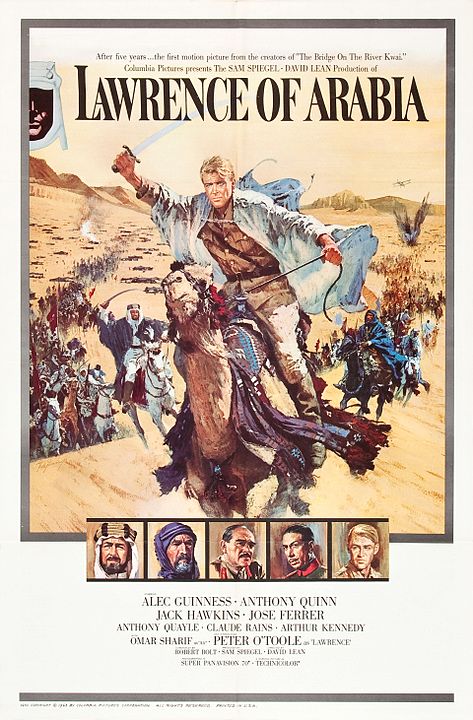
- Lawrence of Arabia
The year 1962 was a major one for the film industry as many new films were released. Lawrence of Arabia was one such film which was the most grossing film of the year that achieved over 7 Academy Awards. As the name suggests, the film was based on a historical drama based on famous T.E. Lawrence who was a British army officer and took part in the Arab Revolt and Palestine Campaign.
The film was a co-production between the British company, Horizon Pictures, and the American company, Columbia Pictures. With a budget of $15 million, the film earned over $70 million in the box office which shows how successful the film was. The film has received the award for Best Picture while the director has received the award for Best Director.
The US Library of Congress National Film Registry has also preserved the film for being of much cultural and historical importance.
- Launch of James Bond Series
Many of us wonder how the James Bond series came into production or when exactly it came. It started off in the year 1962 with the release of Dr. No, the famous spy film which was considered as the first James Bond movie. The film was starring Sean Connery, Ursula Andress, Joseph Wiseman, and Jack Lord.
The commercial returns on this film were amazing as the film was able to earn over $59 million with just a low budget of $1 million. The film was based on the novel of the same name by Ian Fleming. Although critics had mixed views regarding this film, it soon gained reputation and became the first block to the long road of the James Bond series that was continued even 50 years after Dr. No.
Music
- Top Bands and Singles
1962 was a year where the music industry was on a constant rise. There were 6 major bands that were created in this year which includes Booker T. & the MG’s, Herman’s Hermits, The Rolling Stones, The Trashmen, Question Mark and the Mysterians, and The Routers. Much of these bands were highly successful for the first ten years of their startup. However, none of these bands are active today.
The biggest hit singles for the year include Return to Sender, I Can’t Stop Loving You, Telstar, Can’t Help Falling in Love, and Good Luck Charm. Out of these five songs, three were of Elvis Presley which brought him much success later as well.
- Musical Theatres and Films
The music industry also rose in 1962 because of how music was being used in other areas such as the fact that musical theatres and film productions were also being done. Much of the musical theatres were by Broadway Productions of America where there were more than 300 to 400 productions per show. Some of the top ones include All American, A Funny Thing Happened on the Way to the Forum, I Can Get It for You Wholesale, Little Me, and No Strings.
Different types of musical films were also released in the year 1962. Some of these films such as Billy Rose’s Jumbo and Gypsy got famous as well. Other musical films include The Music Man starring Robert Preston, The Road to Hong Kong, State Fair, and Wild Guitar as well.
Technology
- Space and Astronomy
Space and Astronomy were important subjects of the decades. Regular advancements were being made in the field by different organizations round the globe for the purpose of space exploration. On February 20th, John Glenn became the first American to orbit the entire earth three times in just less than 5 hours. Scott Carpenter became the second American to orbit the earth on May 24.
However, this year included the terrible news as well. The Ranger 3 Spacecraft was launched on January 26 but due of course because of a malfunction, it missed the moon by 22,000 miles. Ranger 4 was a spacecraft which was launched from Earth to have the pictures taken of the lunar surface. However, due to some technical error in the software system, the Ranger 4 spacecraft crashed on the moon without any reasonable scientific data required. Mariner 1 Space rocket was also among the first ones to be advanced out into space but was destroyed just soon after its launch because the rockets failed to respond rightfully to the guidance.
- Computer Advancement
It was the year 1962 when the concept of personal computers was introduced by The New York Times. John Mauchly, who was the engineer behind some room-size computers, gave a speech about computers and gave the idea that everyone would be having their own computers with miniature storage devices in a period of 10 years. He was also the one who stated that an average kid could become the master of a personal computer soon.
On December 7th, The Atlas Supercomputer which was the most powerful computer on the planet was dedicated to the University of Manchester in England for multi-programming functions.
- TX-2 Usage
The TX-2 was a computerized system which is the basics of what is considered today as the concept of Artificial intelligence as well as human-computer advanced interaction. Although initially invented in 1958 as a successor of the TX-0, it was the year 1962 when Ivan Suterland used the TX-2 Computer to run Sketchpad.
One of the key features of the TX-2 was that it had a high probability of human computer interaction through a screen. It is considered that this usage was what signified the use of computer aided design programs which are used today in modern manufacturing as well.
Sports
- FIFA World Cup
1962 was the year when the FIFA World Cup took place. It was the seventh FIFA World Cup for men and was held between 30 May to 17 June 1962 in Chile. 16 countries took part in the FIFA World Cup and a total of 32 matches were played. It was one of the biggest events of the year which is why about 29,000 people attended every match while the total number of people who watched the matches was more than 800,000.
The results of the championship were in the favor of Brazil who won the championship against Czechoslovakia with a score of 3 to 1. Host country Chile finished third position while defeating Yugoslavia.
- Tennis Updates
The sport of tennis was just being one sided this year. This is because Rod Laver made a complete sweep against the Australian player Roy Emerson in the finals. Rod Laver was the guy who won all three of the events and won the golden slam two times; first being in 1962 and the second being in 1969.
Margaret Court was a female tennis player who also won three grand slam titles for women tennis.
In addition to that, there were other major championships held this year as well which include French Men’s Singles Championship, French Women’s Singles Championship. American Men’s Singles Championship, and American Women’s Singles Championship as well.
- Commonwealth Games 1962
Perhaps one of the most interesting events of 1962 was the Commonwealth Games which were held in Australia. The event was held between 22nd November and 1st December of 1962. 35 nations participated in the Commonwealth Games with a total of 863 athletes. There were a range of events in the games which included Bowls, Boxing, Track Cycling, Road Cycling, Fencing, Rowing, Swimming, and Wrestling as well.
A total of 104 events were held in the Commonwealth Games of 1962.
Fashion
- Adapting Modern Fashion
Fashion changes were at their peak in 1962 and people were trying new kinds of outfits and were moving to a much latest kind of fashion. Skirts as well as miniskirts started to get highly popular in both formal and casual events. Dressing sense of people was quite influenced by the haute couture and Pierre Cardin. The Yves Saint Laurent Couture show was also held in the year 1962 which promoted skirts mainly. The Paris Spring Fashion Show was also held in 1962.
Television
- The Beverly Hillbillies
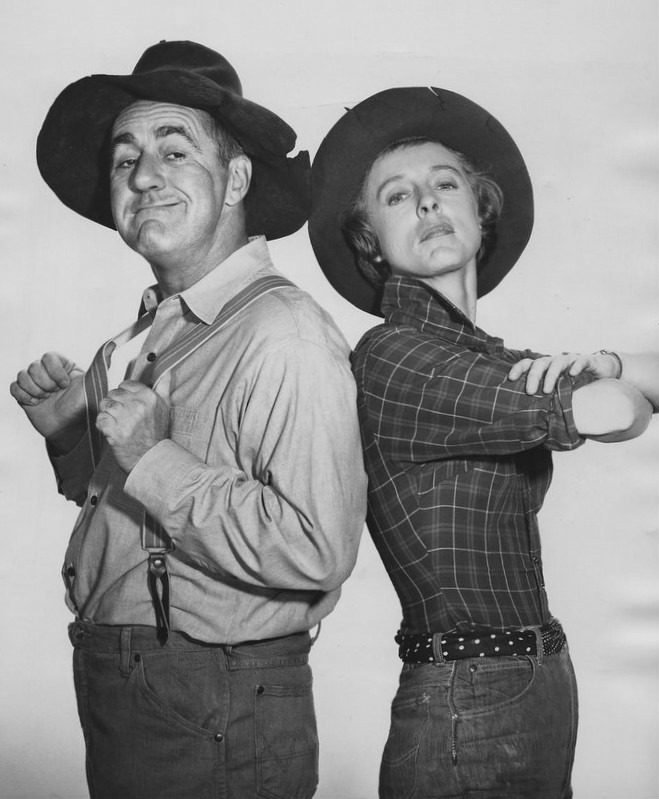
In 1962, the famous American sitcom The Beverly Hillbillies was started which continued for the coming 9 years up until 1971. The show starred Buddy Ebsen, Irene Ryan, and Donna Douglas. Secondary role was played by Max Bear Junior. The show revolved around a poor family who moved to Beverly hills after their oil was discovered on their land.
The show production company was Filmways and was written by Paul Henning as an inspiration from the other series by the same writer country cousin. The show was so successful that it was among the top 20 most watched programs on television for eight out of nine seasons while it also got the rank of number one series of the year for two times. A film was also made based on the show sometime later.
- The Candid Camera
According to Nielsen Mandela Research, The Candid Camera was the second most grossing show of the year and out of all the ratings, the 1962 series was the one where the show got the highest rating of 31.1. It was a show that was based on hidden camera realities presented on the television. It often consisted of jokes as well which got it much popular.
The format for the show was revived multiple times later. The show was originally created and produced by Allen Funt.
News
- US Sponsored Prisoners Released
In the year 1961, there was an event in the Bay of Pigs where US Sponsored Cuban exiles attacked Cuba. 1500 of these men violently entered the south coast with arms provided by the US government but were easily defeated in only 3 days and were captured. In the coming year 1962, Castro released about 1113 captured rebels only in exchange for $53 million in food and medicine supplies by private donations funded by the government of the United States.
- Newly Independent Countries
There were many countries in this time which were seeking independence. Some of them were African economies while the others were Russian and wanted to seek independence due to the ongoing issue of Soviet Union. Among the top countries that became independent in the year 1962 include Burundi, Jamaica, Western Samoa, Uganda, Trinidad and Tobag.
- Columbus Day Storm of 1962
Among one of the most terrible news for the year was The Columbus Day Storm of 1962 which is also named as the Big Blow. It was a storm that initially struck the West Coast of Canada and Northwest Coast of the United States on October 12. It is considered as the most intense to strike the region since 1948.
The storm was so big that it brought $240 million in commercial and private damages while the number of casualties with the storm were 46. The highest gust of the storm was over 270 kilometers per hour.
Dance
- New Dances
The cultural changes are also depicted by the events and how people interact with each other. On the many events that occurred in 1962, there were several kinds of dances as well that were practiced by the people. Some famous dances of the period include The Chicken, The Drag, The Flick, The Limbo, and The Boogaloo.
Conclusion
The pop culture of 1962 was one of the best ones with many ups and downs happening throughout the year in different fields and events. It can be concluded that the highlights of 1962 pop culture are quite interesting and changed the lives of how people lived soon.
Related posts:
- Highlights of the Major Pop Culture Trends of the 1960s
- Pop Culture in Review for the Year 1960
- Pop Culture in Review for the Year 1961
- Pop Culture in Review for the Year 1963
- Pop Culture in Review for the Year 1964
- Pop Culture in Review for the Year 1965
- Pop Culture in Review for the Year 1966
- Pop Culture in Review for the Year 1967
- Pop Culture in Review for the Year 1968
- Pop Culture in Review for the Year 1969
- Interesting Trivia About 1960s Pop Culture